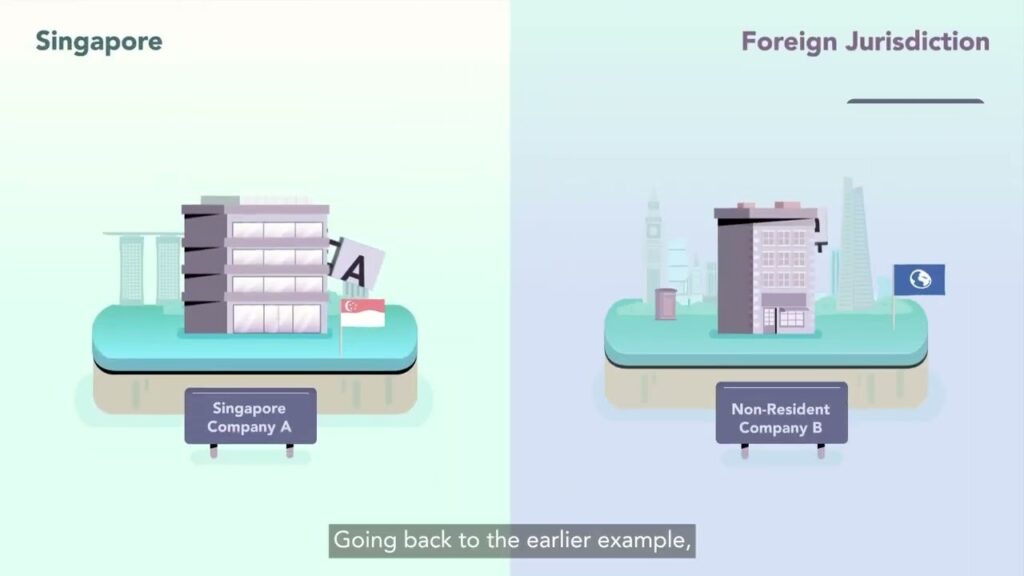
Singapore’s status as a premier global financial and trade hub is deeply intertwined with its sophisticated international tax framework, most notably its vast network of Double Taxation Agreements (DTAs). For Singapore business professionals engaging in cross-border trade, investment, or services, understanding and leveraging DTAs is crucial for maximising profitability and ensuring global tax compliance.
A DTA is essentially a bilateral treaty between Singapore and a foreign jurisdiction. Its primary purpose is to prevent double taxation—the imposition of tax on the same income by two different countries—and to provide clarity on the taxing rights of each jurisdiction.
1. The Core Mechanism: Eliminating Double Taxation
Singapore operates a territorial tax system, meaning its corporate tax rate (17%) generally applies only to income sourced in Singapore, or foreign income remitted into Singapore. However, without a DTA, income earned abroad could still be taxed both in the country where it originated (the source country) and again in Singapore upon remittance.
DTAs mitigate this through specific relief mechanisms:
- Tax Exemptions: Certain types of foreign-sourced income, such as foreign branch profits, foreign-sourced dividends, and foreign-sourced service income, may be exempt from tax in Singapore, provided conditions (such as a minimum headline tax rate of 15% in the foreign country) are met.
- Double Tax Relief (DTR) / Tax Credits: Where the income is taxable in both countries, the DTA allows the Singapore tax-resident entity to claim a foreign tax credit against its Singapore tax liability for the foreign taxes already paid. The credit is typically limited to the lower of the foreign tax paid or the Singapore tax payable on that same income.
- Allocating Taxing Rights: DTAs clearly define which country has the primary right to tax specific income streams (e.g., royalties, interest, dividends, business profits), thus eliminating ambiguity and reducing disputes.
2. Reducing Withholding Tax (WHT) Rates
One of the most practical and immediate benefits of DTAs for a Singapore-incorporated company is the reduction or elimination of Withholding Tax (WHT) on payments made from a treaty country to Singapore.
WHT is a tax deducted at source by the payer in the foreign country on income streams like:
- Interest: Payments received from foreign borrowers.
- Royalties: Fees received for the use of Intellectual Property (IP), such as software licenses or patents.
- Dividends: Income distributed by a foreign subsidiary.
In the absence of a DTA, the foreign country’s domestic WHT rate (which can be as high as 25-30%) would apply. Under a DTA, this rate is often capped or reduced significantly (e.g., to 0%, 5%, or 10%), dramatically boosting the net returns and cash flow of the Singapore entity’s cross-border investments.
3. Creating Tax Certainty and Stability
DTAs offer crucial legal clarity, which is essential for long-term strategic planning and attracting Foreign Direct Investment (FDI).
- Defining Permanent Establishment (PE): A key feature of every DTA is the definition of a Permanent Establishment (PE). This specifies the threshold of physical or operational presence a Singapore business must have in a foreign country before its profits become taxable in that country. Clear PE rules allow businesses to structure their international operations to avoid unintended tax obligations.
- Dispute Resolution: DTAs include a Mutual Agreement Procedure (MAP), providing a mechanism for IRAS and the foreign tax authority to resolve disputes regarding the application or interpretation of the DTA, offering a pathway to resolve complex tax conflicts.
4. How to Claim DTA Benefits
To access the benefits of Singapore’s comprehensive network of over 100 DTAs, companies must establish and prove their tax residency.
- Obtain a Certificate of Residence (COR): Issued by the IRAS, the COR certifies that your company is a tax resident of Singapore for a specific Year of Assessment. This document is essential proof to present to the foreign tax authority to qualify for reduced WHT rates or other DTA benefits.
- Verify the DTA Provisions: Each DTA is unique. Companies must consult the specific treaty with the target country to confirm the applicable rates and claiming procedures for each type of income (e.g., the DTA with India will differ from the DTA with Germany).
Effectively navigating and implementing DTA provisions is key to enhancing the international competitiveness and global expansion strategy of any Singapore business. Given the complexity and potential for large tax savings, consulting with a professional corporate service provider is highly recommended to ensure compliance and optimal tax structuring.
For more information on the structure of these tax treaties, you can watch this video on Avoidance of Double Taxation Agreements (DTAs) – YouTube